
When you get hurt your whole life can change quickly. The pain can be so bad that you do not want to move you have trouble sleeping and then the medical bills start coming in before you are even feeling better. This is a problem in Cleveland, Ohio. Every year there are than 15,000 car accidents in Cleveland and in 2024 75 people died in car crashes, which is a lot more than the 59 people who died in 2023.
Cuyahoga County has the most accidents caused by people not paying attention while driving in the whole state with almost 2,300 of these accidents happening between 2020 and the beginning of 2022. In all of these situations the main question is the same: did someone not do what a normal person would do to stay safe and did that cause someone to get hurt? The car accidents in
Cleveland are a deal and the medical bills from these car accidents can be really expensive. The pain, from these car accidents can be very bad. The trouble sleeping because of these car accidents can be really frustrating.
Insurance calls may feel urgent, yet to secure payment, counsel must build a tight path from legal duty to unsafe conduct to injury to measurable losses. Every step needs records, not emotion. For Cleveland residents dealing with the aftermath of a crash, fall, or other harmful event, consulting a personal injury lawyer in Cleveland early can help organize evidence and protect the claim before key proof disappears. Here is how attorneys prove negligence step by step.
Commercial vehicle crashes often require additional evidence because federal regulations can directly affect commercial truck accident liability.
What Negligence Means in a Claim
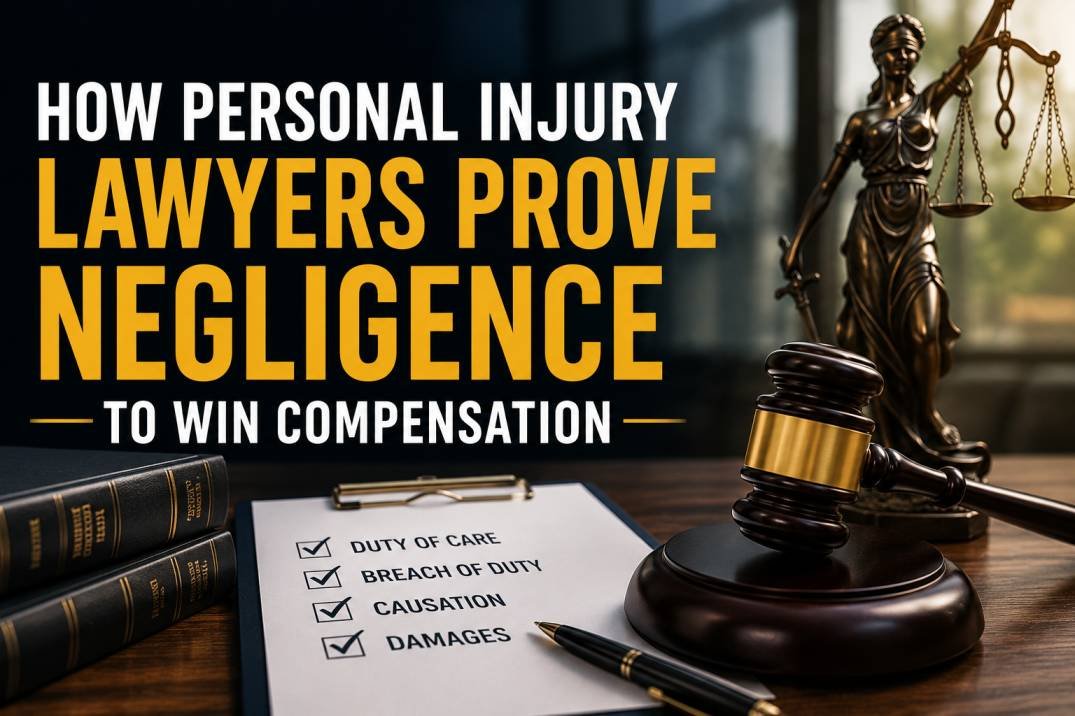
Negligence is usually proven through four elements: duty, breach, causation, and damages. Early planning matters because each element needs its own support. An experienced attorney often starts by matching facts to those elements, then listing the documents, witnesses, and medical proof required. Insurers look for weak links, unclear fault, thin clinical notes, or missing wage data, then push value down.
In motorcycle accident cases specifically, negligence claims often hinge on details like right-of-way violations and licensing compliance — see our guide on Missouri motorcycle license requirements for more on how this plays out.
Duty of Care: Showing an Obligation Existed
Duty asks what careful behavior looked like in that setting. Drivers must follow traffic rules and stay alert. A store must correct known hazards or warn visitors in time. Clinicians must meet accepted standards within their specialty. Proof often comes from statutes, safety policies, contracts, and routine practices that show what should have happened on that day, at that location, under those risks.
Breach: Proving the Conduct Fell Short
Breach focuses on the unsafe act, or the omitted step, compared with reasonable conduct. Photographs, video, witness statements, incident reports, and maintenance logs often matter more than opinions. Small clues can carry weight, skid marks, worn treads, dim lighting, missing cones, or a broken handrail. A clear narrative helps: a preventable choice created a hazard, then harm followed.
Causation: Connecting Fault to the Injury
Causation ties the unsafe conduct to the medical outcome. Defense teams often argue the symptoms came from a prior condition or a later event. Lawyers lean on timelines, urgent-care notes, imaging, and specialist impressions to show onset after the incident. They also explain gaps in treatment, mixed pain patterns, or delayed referrals that insurers use to cast doubt. A tight chronology protects this link.
Damages: Turning Harm Into Verifiable Numbers
Damages translate suffering into documented costs and functional limits. Bills, pharmacy receipts, therapy charts, and appointment histories show medical spending. Pay stubs, tax returns, and employer letters support missed income. When recovery is long, planning may include future care needs, assistive devices, and work capacity changes. The goal is simple: connect each dollar figure to a record, and each limitation to clinical findings.
Evidence Collection: Acting Before Proof Disappears
Good cases can weaken when evidence fades. Surveillance footage may be erased, vehicles repaired, and hazard conditions altered within days. Attorneys may send preservation notices, request electronic logs, photograph the scene, and secure copies before systems overwrite data. Witness recall also shifts with time, stress, and outside influence. Early, organized collection keeps the story stable and reduces later disputes.
Using Experts Without Overcomplicating the Case
Experts help when technical issues exceed everyday knowledge. Reconstruction can clarify speed, sightlines, and impact forces. Engineers can address code compliance or product failure. Medical experts explain injury mechanisms, expected healing, and long-term impairment. Strong reports stay narrow, answering the disputed point with clear methods. Too many opinions can confuse a file, burying the key facts under extra commentary.
Countering Common Defense Arguments
Insurers often raise shared fault, lack of notice, pre-existing symptoms, or excessive care. Lawyers answer with time-stamped records showing how long a hazard existed, how the injured person acted reasonably, and how treatment matched clinical signs. They may also point out contradictions, such as denying liability while arguing the injury is minor. Calm, document-driven replies usually work better than heated back-and-forth.
Settlement Leverage: Presenting a Trial-Ready File
Many claims resolve when the other side sees credible trial risk. A trial-ready file is organized, consistent, and supported by reliable witnesses. Demand materials often connect each liability point to a source and each expense to a bill. When medical notes align with imaging and functional testing, the case reads as trustworthy. That posture makes low offers harder to justify, improving negotiation strength. Nationally, distracted driving alone claimed 3,208 lives in 2024, according to NHTSA, a reminder that negligence-based claims remain a critical part of the legal system.
Conclusion
Compensation rarely turns on one dramatic photo or a single witness. Outcomes improve when the proof supports every element, legal duty, unsafe conduct, medical connection, and documented losses. Early preservation protects time-sensitive records, while careful medical documentation explains symptoms in physiologic terms, not vague complaints. Anticipating defense arguments also reduces surprises. A well-prepared negligence case reads like a consistent clinical timeline linked to real-world costs.
Many negligence cases involve motor vehicle collisions where proving fault is critical. Learn how evidence is used in car accident liability claims to establish responsibility and strengthen a compensation case.


Comments (1)
[…] often become the fallback avenue for injured consumers — which is part of why understanding how personal injury lawyers prove negligence to win compensation matters even in cases involving federally regulated […]