
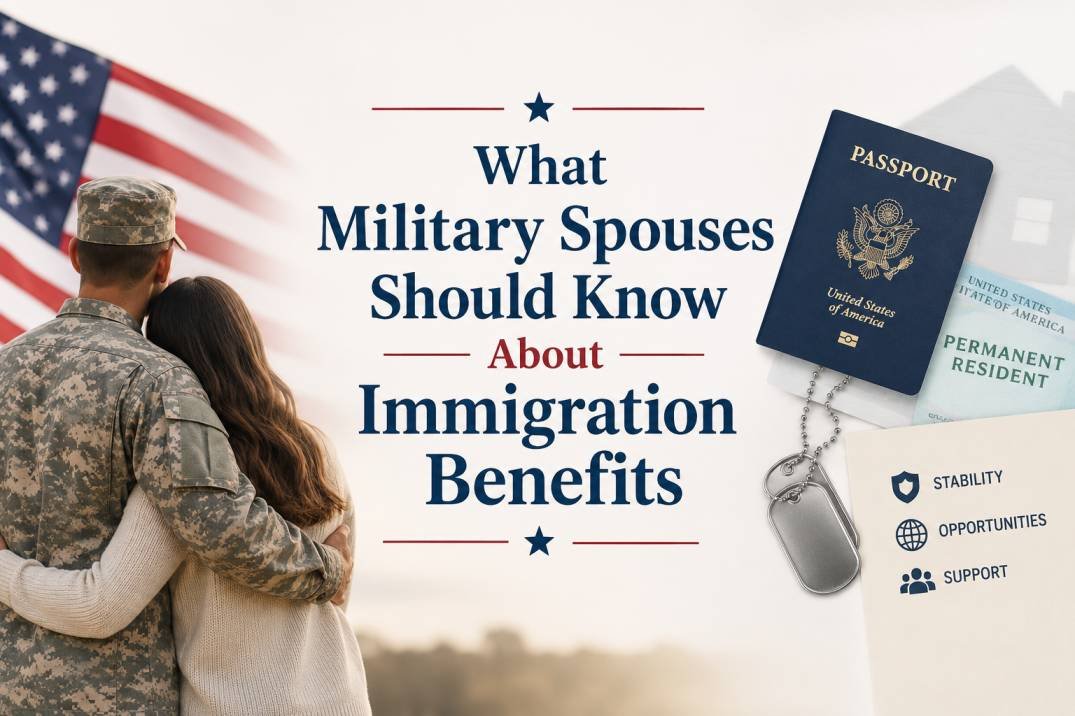
Georgia is home to several major military installations. Many military families settle in the Atlanta metro area during or between assignments. For the spouses of service members who are navigating the immigration system, the combination of frequent relocations, overseas deployments, and strict filing deadlines creates challenges that require planning around military timelines.
A military spouse immigration lawyer can help you determine which benefits apply to your situation, whether that involves expedited naturalization, parole in place, green card processing, or survivor protections. Because military orders can change your filing options on short notice, reviewing your eligibility and assembling your documentation before a deployment or PCS order takes effect will help prevent delays that are difficult to correct after the fact.
Table of Contents
Key Benefit Categories
Most military spouse benefits fit into several practical categories. Citizenship processing may move faster when overseas orders are in effect. Family-based residence may remain available through marriage. Parole-related relief can address certain unlawful entries. Survivor protections may preserve eligibility after a service member’s death. Each route has different requirements for evidence, so families should clarify their circumstances before submitting any forms.
Expedited Naturalization
Some spouses of United States citizen service members may qualify for faster citizenship processing. This often matters when official orders send the family abroad. The applicant usually needs permanent resident status at the interview. Immigration officers also review English proficiency, knowledge of civics, moral character, and adherence to constitutional principles. Waivers or exceptions may apply in certain cases.
Overseas Citizenship Rules
Ordinary residence rules can be difficult to meet during military service. A spouse living abroad with a service member may still have a pathway to citizenship. The file should contain evidence of a valid marriage, permanent resident status, qualifying orders, and shared residence outside the United States. Consistent names, dates, and addresses help officers connect military records with immigration evidence.
Parole in Place
Parole in place may assist certain spouses who entered the United States without inspection. Approval can provide lawful presence for a limited immigration purpose. In some cases, it may also support later green card processing within the country. Officers evaluate each request on a case-by-case basis. Strong applications usually include proof of military service, identity documents, marriage records, details of hardship, and clean background information.
Green Card Support
Marriage to a United States citizen or permanent resident can support a green card application. The process depends on lawful entry, current status, prior removals, visa history, and any criminal record. Military service may help explain hardship or support certain forms of relief, but it does not erase all legal issues. Careful screening before filing protects the applicant from potentially negative consequences.
Survivor Benefits
A surviving spouse may retain immigration options after a service member dies during active duty or from a qualifying service-related condition. These protections can help ensure that a family does not lose its eligibility because of that death. Useful evidence includes service records, death certificates, proof of marriage, prior filings, and identity documents. Deadlines can be strict, so prompt review is important.
Children in Military Families
Children may have separate immigration paths through a military parent or stepparent. Some may acquire citizenship while living abroad with a qualifying service member. Others may depend on adoption rules, permanent residence, custody, or derivative citizenship law. Each child’s file should be reviewed separately, even when siblings share the same household.
Documents That Matter
Reliable documents are essential for a strong filing. Families should gather marriage certificates, divorce decrees, birth records, passports, residence cards, service orders, deployment papers, tax returns, and proof of shared housing. Foreign-language records need certified translations. Providing clear copies can reduce follow-up requests. If there are discrepancies between dates or names, a written explanation and supporting evidence can prevent confusion.
Common Filing Risks
Problems often arise from categorizing applications incorrectly, missing order details, using outdated forms, or overlooking immigration violations. Long absences, unpaid taxes, arrests, prior removals, and false citizenship claims can also affect eligibility. While having a military connection is significant, approval is never automatic. Officers still examine the law, the record, and the credibility of every submission.
Conclusion
Military spouses may have valuable immigration options, but each benefit depends on documented facts and timely action. Citizenship, parole in place, green card processing, survivor relief, and child citizenship all have separate legal requirements. Service-related evidence can strengthen a case when it is presented clearly. With thorough preparation, accurate forms, and consistent records, military families can protect their status while supporting the demands of service life.