
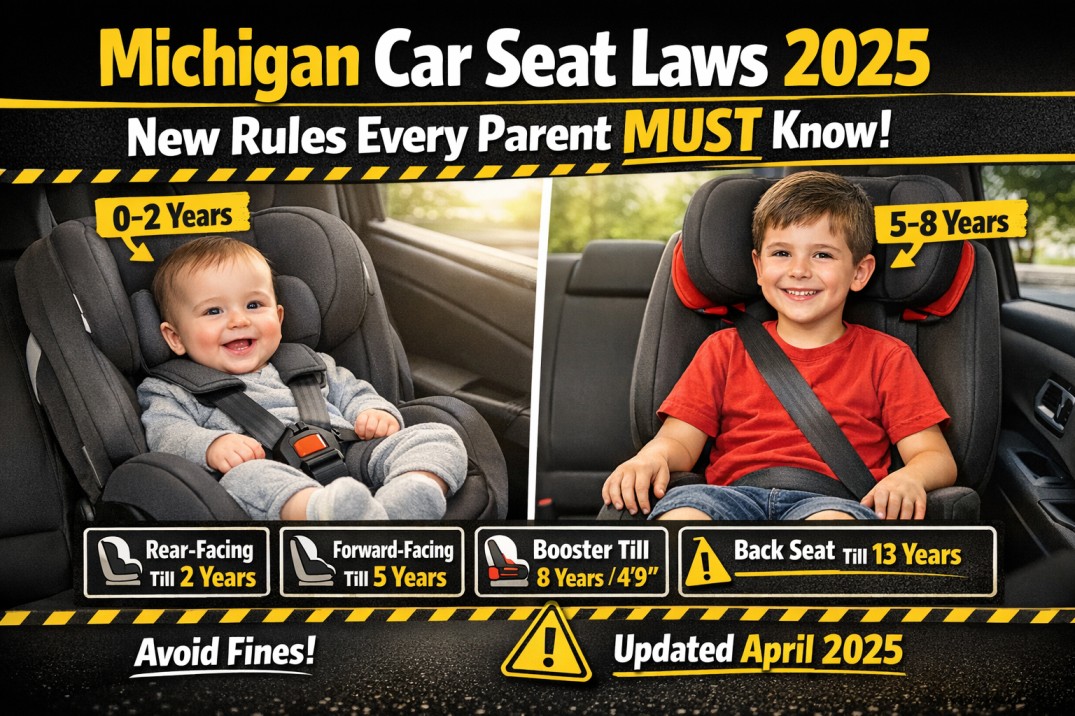
When we talk about car seat safety, we aren’t just talking about a checklist for a weekend trip. We are talking about the single most effective way a parent can intervene in the physics of a car crash. According to data from the NHTSA, a correctly installed car seat can reduce the risk of fatal injury by as much as 71% for infants and 54% for toddlers.
But here is the catch: Michigan’s laws are specific. They aren’t just “suggestions” based on age; they are legally binding rules built around a child’s physical development—their bone density, their height, and how their spine reacts to sudden impact. In Michigan, the state has carefully mapped out these requirements through MCL 257.710d, ensuring that every child has a fighting chance if the unthinkable happens on the road.
Important Key Takeaways: Michigan Car Seat Laws
- The Michigan car seat law requires children whose age is under age 4 to ride in a car seat and children under age 8 to use a booster seat unless they are taller than 4 feet 9 inches
- Proper car seat installation and is we use it can reduce the risk of serious injury or death in a crash by up to 71 percent for infants
- Parents and caregivers can face fines and civil liability if they fail to follow Michigan’s child restraint laws
- Car seat whose requirements vary based on the child’s age, weight, and height with specific guidelines for each stage
- If another driver’s negligence causes a crash that injures your child, you may have grounds for a personal injury claim even if car seat laws were followed
What Are Michigan Car Seat Laws Requirements?
In Michigan, the rules for how kids should ride in cars aren’t just suggestions—they’re specific guidelines based on how big the child is and how old they are.
These laws are designed to take the guesswork out of choosing the right car seat, making sure every family has a clear plan to keep their little ones as safe as possible if an accident ever happens.
Rear-Facing Car Seats for Infants and Toddlers
Think of a rear-facing seat as a protective little cocoon for your baby. In a crash, it’s designed to cradle their head, neck, and spine, absorbing the impact so their tiny body doesn’t have to. While the “standard” is to keep them facing the back until they’re at least two, many parents are choosing to stick with it even longer. As long as your little one hasn’t hit the height or weight limit for that specific seat, there’s no rush to flip them around—staying rear-facing is actually the safest way for them to ride.
Rear-facing seats have specific legal and safety points that parents should know:
- Weight and height limits come from the seat manufacturer. Parents can check the manual or labels on the seat.
- A snug harness keeps the child secure. Your fingers should not pinch the strap fabric at the shoulders.
- The seat must sit at the correct recline angle so the child’s head does not bend forward.
- The safest place for a rear-facing seat is usually the back seat.
Forward-Facing Car Seats for Young Children
Once your kiddo finally outgrows that rear-facing seat, you can officially flip them around into a forward-facing seat with a harness. Most kids are going to be riding this way for a while—usually several years—until they’re big enough for a booster.
The real MVP here is that harness. It’s built to keep kids hugged tightly against the seat, so if you ever have to slam on the brakes or if an accident happens, their body isn’t jolting forward. It’s all about keeping them stable and secure while they’re still too small for the car’s built-in belt system.
That’s exactly why understanding the legal requirements is just as important—because these safety features are not just recommendations, they’re part of the law. If you want a deeper understanding of how laws like these are structured and enforced, you can also check out our guide on Reserved Powers, where we break down how different authorities regulate safety rules like car seat laws.
All Parents should check for the following:
- The seat should use both a harness and the top tether to keep it anchored.
- Children should sit all the way back in the seat with the harness at the correct height.
- The seat should remain tightly installed with little to no movement when pulled at the base.
Booster Seat Requirements for Older Children
In Michigan, the kids need to be stick with a booster seat until they will hit their 8th birthday or grow to be 4 feet 10 inches tall. The whole point of the boosters is exactly what the name suggests—it “boosts” them up so the car’s seat belt actually sits where it’s supposed to (across the lap and shoulder) instead of digging into their neck or stomach.
Even if your child feels like a “big kid,” or they seem to be big they’ll likely be in a booster longer than they’d like because getting that perfect belt fit takes time. You’ll know they’re finally ready to ditch the booster when they can sit with their knees bending comfortably at the edge of the seat, the lap belt stays low on their hips, and the shoulder strap crosses their chest without rubbing against their face or neck.
When Can a Child Use a Regular Seat Belt?
Moving to a regular seat belt is a big milestone, but it’s really more about the fit than just hitting a specific age. Even though Michigan law gives the green light once a child turns 8 or reaches 4’9″, every kid is built differently.
The real test is how the belt sits: if it’s still rubbing against their neck or riding up on their belly, they aren’t quite there yet. Some kids just need a little extra time in a booster to make sure the belt crosses their chest and hips exactly where it’s supposed to. It’s better to wait a bit longer than to rush into a seat belt that doesn’t actually protect them properly.
Parents can look for signs that show a child is ready:
- The child can sit upright for the entire trip without slouching.
- The shoulder belt touches the center of the chest and shoulder.
- The lap belt sits low on the upper thighs.
What Are the Penalties for Violating Michigan Car Seat Laws?
If a driver breaks Michigan’s car seat laws, it usually results in a civil infraction and a fine. On the surface, the ticket might not seem like a huge deal, but the “hidden” costs can really add up. It goes on your driving record and can easily cause your insurance rates to spike. For a family already trying to make ends meet, that small ticket can turn into a long-term financial headache.
The Bigger Risk: Personal Injury Claims
There’s also a major catch if you’re ever in an accident. If your child is hurt and you try to bring a claim against the other driver, the insurance company is going to look closely at that car seat.
Under Michigan’s comparative fault rules, they might argue that the injuries were worse because the seat wasn’t used correctly. Essentially, they’ll try to shift the blame onto you to avoid paying out the full claim. However, when you’ve followed the law to the letter, it’s much harder for them to make that argument. It keeps the focus exactly where it belongs: on the at-fault driver’s actions.
These types of arguments attempt to shift blame.
In Michigan, there’s a legal concept called “comparative fault,” which is basically the insurance company’s way of saying, “Wait, we aren’t the only ones to blame here.” If they can prove that a parent didn’t use the right car seat or they just installed it too incorrectly, they’ll definitely try to use that as an excuse to lower the payout for a have a better claim.
But before moving ahead here’s the thing: when you follow all the government’s rules to the letter, you can take that weapon right out of their hands. By sticking to the guidelines, you’re proving that you did everything humanly possible to keep your child safe. Actually, it shifts all the focus back where it belongs on the other driver’s mistakes—and it puts you in a much stronger position to get the best possible support your family actually needs.
Who Is Responsible for Ensuring Proper Car Seat Use?
In Michigan, the weight of keeping kids safe falls squarely on the adult behind the wheel. It is not just about having the seat; the person who is driving has to make sure it’s the right seat, that it’s installed correctly, and that it’s actually being used the way it was intended.
Parent and Guardian Responsibilities
Even if you are not the one who is driving, as a parent or guardian, you are usually the “Safety Guard.” This means you’re totally responsible for picking out the seat, getting it installed, and—most importantly and best part is making sure anyone else who drives your child (like a grandparent or a babysitter) actually knows how to use it. If your child is heading out in someone else’s car, the best move is to send their seat with them to make sure there’s no “making do” with just a seat belt.
Rideshares and Taxis: The “DIY” Rule
Here’s a big one: in Michigan, Uber, Lyft, and taxi drivers aren’t required to provide car seats. If you’re calling a ride, the responsibility is 100% on you to bring your own seat. It can be a so so hassle to carry one around, but planning avoids that stressful (and dangerous) moment of realizing you have no way to safely buckle in your child.
Borrowing or Lending a Car
If you borrow a friend’s car or lend yours out, the “responsibility” follows the driver. Michigan law doesn’t care who owns the car; it cares who is operating it at the moment. If you’re the one driving, you’re the one on the hook for making sure every child in that vehicle is restrained properly.
How Should You Install and Use a Car Seat Correctly?
Proper installation protects children from serious injury. Even seats that appear secure may not sit tightly enough or may be at the wrong angle.
Installation Best Practices
Parents can use these guidelines:
- Tighten the seat belt or lower anchors while pressing down on the seat.
- The seat should move less than one inch.
- Attach the top tether for forward-facing seats.
- Keep the harness snug without twists.
Where to Get a Professional “Thumbs Up”
If you want total peace of mind, you can get your seat checked by a certified expert for free. In Michigan, plenty of places have specialists (called CPSTs) who will walk you through the install:
Local Fire & Police Departments: Many stations—like those in Northville, Plymouth, or South Haven—have technicians on staff. It’s usually best to call ahead and make an appointment.
Hospitals: Places like Henry Ford (Ferndale) or Trinity Health (Bloomfield) host regular inspection events.
Community Events: Organizations like Safe Kids Michigan run “Checkup Events” throughout the year where you can just drive up and get help on the spot.
Pro Tip: Since Michigan Car Seat Laws officially got stricter as of April 2025, these pros are also great for double-checking that your current setup meets the new legal requirements (like the 2-year-old rear-facing rule).
What Happens if Your Child Is Injured in a Car Accident?
Parents experience deep worry when their child suffers injuries during a crash. Even when a child rides in the correct seat, a negligent driver can still cause harm.
Types of Injuries Children Sustain in Crashes
Children often suffer soft tissue injuries, fractures, head injuries, bruises, and cuts. Some injuries appear later because adrenaline can hide early symptoms. Any injury requires prompt medical care because children grow quickly and small injuries can carry long term effects.
How Car Seat Compliance Affects Your Claim
Correct restraint use helps parents show that the crash and the at fault driver’s negligence caused the child’s injuries. When parents follow Michigan’s laws, insurers have fewer arguments regarding seat misuse. Compliance supports a stronger and clearer claim.
Michigan’s No Fault Insurance and Child Injury Claims
Michigan’s “No-Fault” system is basically designed to make sure your medical bills and related costs get paid quickly, regardless of who actually caused the crash. For children, this usually means they’re covered under their parent’s auto insurance policy. These benefits are a huge help because they cover everything from doctor visits and rehab to even some extra help around the house while your child recovers.
When “No-Fault” Isn’t Enough
Sometimes, an accident is so bad that the standard benefits just don’t cover the full physical or emotional toll. In those cases, you might decide to file a lawsuit against the driver who was at fault.
This is where legal authority comes into play—many traffic and safety regulations exist because of expressed powers, which allow governments to create and enforce laws that protect public safety on the road. If you want to better understand how these legal powers shape liability and accident claims, you can also explore our detailed guide on Expressed Powers.
However, Michigan has a specific “legal hurdle” for these types of claims called “Serious Impairment of Body Function.” To win a case for things like pain and suffering or long-term damages, you have to show three things:
- It’s “Objectively Manifested”: The injury can’t just be something the child feels (like a general ache); it has to be something a doctor can actually see or find on a scan (like a break or a specific diagnosis).
- It affects an “Important Body Function”: This means the injury interferes with something vital—like walking, learning, or using their hands.
- It changes their “Normal Manner of Living”: You have to show that the injury has actually shifted how your child lives their day-to-day life compared to before the accident.
Basically, if the injury is serious enough to change your child’s world, the law allows you to go after the at-fault driver for the extra support and compensation your child deserves for their future.
Michigan Car Seat Laws FAQ
1. When can I turn my child’s car seat to face forward?
Under the new rules for Michigan Car Seat Laws, you must keep your child in a rear-facing seat until they are at least 2 years old. The only exception is if they hit the maximum height or weight limit set by the seat’s manufacturer before their 2nd birthday. Safety experts recommend staying rear-facing as long as possible because it’s the best way to protect their head and neck.
2. How long does my child need to use a 5-point harness?
Michigan law now requires children to use a forward-facing seat with a harness until they turn 5 years old or reach the seat’s height/weight limit. While it might be tempting to switch to a booster early, the harness provides much better protection for a growing child’s body.
3. What are the rules for booster seats?
Kids need to stay in a booster seat until they are 8 years old OR reach 4 feet 9 inches tall. Once they hit either of those milestones, they can legally use a standard seat belt—but only if the belt fits them properly (sitting across the collarbone and hips, not the neck and stomach).
4. Can my child sit in the front seat?
The current law is very clear: all children under 13 years old must ride in the back seat if the vehicle has one. The front airbags are designed for adults and can be very dangerous for children, so keeping them in the back is a must until they’re officially a teenager.
5. Are Uber and Lyft drivers required to provide car seats?
No. In Michigan, rideshare and taxi drivers are exempt from providing child restraints. It is your responsibility to bring your own car seat or booster. If you don’t have one, the driver can legally refuse the ride, and more importantly, your child won’t be safe.
6. Can I get a ticket if the car seat is installed incorrectly?
Yes. Michigan is a “Proper Use” state, meaning the Michigan Car Seat Laws doesn’t just say you need a seat—it says you have to use it according to the manufacturer’s instructions. If a police officer sees a loose seat or a chest clip that’s too low, they can issue a citation.
Pro Tip: If you do get a ticket for a car seat violation, Michigan law allows the fine to be waived if you show proof that you’ve since acquired the right seat and received education from a Certified Car Seat Technician.
Note: This article is for informational purposes only and does not constitute legal advice. Readers involved in similar LLC disputes should consult a qualified attorney.