
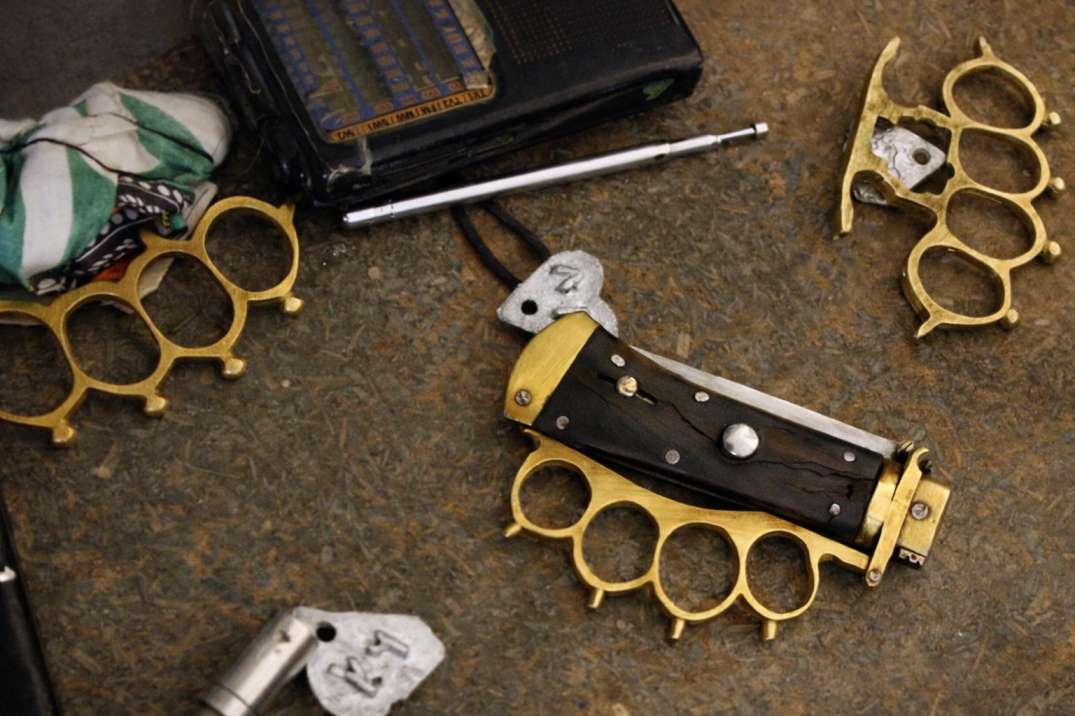
If you have ever Googled the term “are brass knuckles legal in Texas,” you’re not alone. Thousands of Texans mostly ask the same question every month, and this is for good reason. The United States laws around brass knuckles have totally changed dramatically just a few years ago, and a lot of people still don’t know the full story.
The simple answer for this question is: Yes brass knuckles are legal in Texas as of September 1 2019. However the full answer is more complicated as you think because it involves know to how you can carry brass knuckles properly and legally and where you are not allowed to carry them, who is allowed to own brass knuckles and what will happen if you use them in the way.
This blog guide covers everything about your question Are Brass Knuckles Legal in Texas in 2026? From the history, the law changed, the restrictions, the penalties, and real-world self-defense context so you can make an informed decision and stay on the right side of Texas law.
Table of Contents
What Exactly Are Brass Knuckles?
First we need to know what we are talking about and what Brass knuckles are? Actually they are also known as knuckle dusters or metal knuckles. They are weapons, which you can hold in your hand. They are built from brass and iron also.
Most brass knuckles are usually made from things, like brass or steel. They are worn around all your fingers. You have to hold them in your palm.
The way brass knuckles are made helps make your punch stronger. They also keep your fingers safe when you hit something.
Brass knuckles have been used for protecting people for a long time. They were also used a time ago like in ancient Rome. Brass knuckles were also used a lot during the American Civil War.
Today, Brass knuckles carried for three main reasons:
- Self-defense — compact, no ammunition required, quick to deploy
- Collection — historical and decorative value
- Fashion/novelty — some designs double as rings or accessories
All three uses are now legal in Texas. But the rules still matter.
The History of Brass Knuckles Laws in Texas
Before 2019: A Class A Misdemeanor
For decades, possessing brass knuckles in Texas was a Class A misdemeanor under the Texas Penal Code Section 46.02. This was a serious charge — punishable by up to one year in county jail and a fine of up to $4,000.
That meant if you were caught carrying brass knuckles — even for self-defense — you could face real jail time. Law enforcement could arrest you on the spot, and a conviction could follow you for life on your criminal record.
This seemed increasingly out of place in a state that already allowed:
- Open carry of handguns (with a license)
- Carrying tomahawks, clubs, and blackjacks
- Switchblades and large fixed-blade knives
The inconsistency frustrated many Texans and gun rights advocates alike.
2019: The Law Changed Everything
In 2019, the Texas Legislature passed House Bill 446 (HB 446), which removed brass knuckles from the list of prohibited weapons under Texas Penal Code Section 46.02.
Governor Greg Abbott signed the bill into law, and it took effect on September 1, 2019.
With that signature, brass knuckles went from a criminal offense to a legal self-defense tool — overnight.
The bipartisan support for HB 446 reflected a broader Texas philosophy: adults should have the freedom to choose their own means of personal protection, as long as they use those tools responsibly and within the law.
Current Texas Law: What You Need to Know in 2025
Are Brass Knuckles Legal to Own in Texas?
Yes. There is no law in Texas that prohibits owning, purchasing, or possessing brass knuckles on private property. You can buy them online, at a gun show, in a store, or have them handed down as a family heirloom. Ownership is completely unrestricted for adults.
Are Brass Knuckles Legal to Carry in Texas?
Yes, with conditions. You can legally carry brass knuckles in most public places in Texas, but there are important restrictions on where and by whom.
Who Can Legally Carry Brass Knuckles in Texas?
Texas law restricts brass knuckle carry based on age and criminal history:
Age Requirement
You must be 18 years of age or older to legally carry brass knuckles in public in Texas. Minors are not permitted to carry them, and adults who knowingly provide brass knuckles to a minor could face criminal charges.
Criminal History Restrictions
If you have been convicted of a felony or certain assault-related misdemeanors, you may be prohibited from carrying brass knuckles or other weapons. The Texas Penal Code prohibits people with certain violent criminal histories from carrying weapons in public, even weapons that are otherwise legal.
If you’re unsure whether your record affects your carry rights, consult a Texas criminal defense attorney before carrying.
Where Can You NOT Carry Brass Knuckles in Texas?
Even though brass knuckles are legal, there are specific locations where carrying them is prohibited by law. Carrying in these locations — even legally owned brass knuckles — can result in criminal charges.
Prohibited Locations Include:
1. Schools and Educational Institutions Carrying brass knuckles on school property, including K-12 campuses and college/university grounds, is illegal. This applies to public and private schools.
2. Government Buildings Courthouses, government offices, city halls, and similar public buildings are off-limits.
3. Polling Places During an election, brass knuckles may not be carried at or near polling locations.
4. Racetracks Licensed horse or greyhound racetracks prohibit weapons, including brass knuckles.
5. Secured Areas of Airports Beyond security checkpoints at commercial airports, no weapons of any kind are permitted.
6. Amusement Parks Major amusement parks and entertainment venues often post signs prohibiting weapons, including brass knuckles.
7. Places of Worship During Religious Services Carrying brass knuckles into a church, mosque, synagogue, or temple during a religious meeting is prohibited unless the organization has approved concealed carry.
8. Hospitals and Nursing Homes Medical facilities have weapon-free policies backed by Texas law.
9. Bars and Establishments Deriving 51% or More Revenue from Alcohol Businesses that post a “51%” sign under the Texas Alcoholic Beverage Code prohibit all weapons on premises.
10. Correctional Facilities No weapons are permitted in jails, prisons, or detention centers.
Bottom line: When in doubt, leave brass knuckles at home or in your vehicle. Violating a weapon-free zone restriction is a Class A or Class C misdemeanor depending on the location.
Brass Knuckles and Self-Defense: What Texas Law Says
One of the most important questions people ask is: Can I actually use brass knuckles to defend myself without getting arrested?
The answer depends on the circumstances, but Texas law is generally favorable to people acting in genuine self-defense.
Texas Self-Defense Law (Castle Doctrine & Stand Your Ground)
Texas has one of the strongest self-defense frameworks in the country:
Castle Doctrine: In your home, vehicle, or workplace, you have the legal right to use force — including deadly force — to protect yourself against an intruder. You are not required to retreat.
Stand Your Ground: In public spaces, if you are lawfully present and have not provoked the attack, you have no duty to retreat before using force in self-defense.
This means if you are genuinely threatened and use brass knuckles to defend yourself proportionately, you may have a valid legal defense.
The Key Word: Proportionality
The Courts look at whether the force used was proportional to the threat faced. Brass knuckles are considered a non-lethal weapon in most contexts, but if you strike to the head or throat can it cause serious injury or death. Texas law distinguishes between:
- Force — justified to protect against unlawful physical force
- Deadly Force — justified only when you reasonably believe it’s necessary to prevent death, serious bodily injury, kidnapping, sexual assault, or robbery
Using brass knuckles to beat an unarmed person who posed no real threat to you would likely not be protected under self-defense law. Context, threat level, and proportionality all matter.
Always consult a Texas attorney if you have specific questions about self-defense scenarios. Laws can be applied differently based on facts and circumstances.
Brass Knuckles vs. Other Legal Self-Defense Weapons in Texas
How do the brass knuckles compare to other legal self-defense options in the Lone Star State? Here’s a quick breakdown:
| Weapon | Legal in Texas? | Carry Restrictions | Age Requirement |
| Brass Knuckles | ✅ Yes (since 2019) | Location restrictions | 18+ |
| Pepper Spray | ✅ Yes | None for adults | 18+ |
| Tasers/Stun Guns | ✅ Yes | Some restrictions | 18+ |
| Handguns | ✅ Yes | License required (LTC) | 21+ |
| Knives (any length) | ✅ Yes | Location/type restrictions | 18+ |
| Clubs/Blackjacks | ✅ Yes | Location restrictions | 18+ |
| Tomahawks | ✅ Yes | Open carry allowed | 18+ |
| Nunchucks | ✅ Yes | Legal since 2019 | 18+ |
Texas is one of the most weapon-friendly states in the nation. Brass knuckles fit right into that tradition.
What Happens If You Misuse Brass Knuckles in Texas?
Being legal to carry it doesn’t mean that there are no consequences for misuse. Here’s what you could face if you misuse it:
Assault with a Deadly Weapon
If you use brass knuckles for assault someone, you could be charged with Aggravated Assault which comes under Texas Penal Code Section 22.02 — a second-degree felony which is punishable by 2–20 years in prison and fines up to $10,000. So be prepared.
Threatening with a Weapon
Even just brandishing brass knuckles in a threatening manner without a justified self-defense reason can result in assault charges.
Enhanced Penalties
If assault with brass knuckles results in serious bodily injury, or if the victim was a public servant, elderly person, or family member, penalties are significantly enhanced.
Carry in Prohibited Zones
As noted above, carrying in weapon-free zones can result in Class A or Class C misdemeanor charges.
Frequently Asked Questions
Are Brass Knuckles Legal in Texas in 2026?
No. Brass knuckles have been legal in Texas since September 1, 2019, following the passage of House Bill 446. As of 2025, they remain legal to own and carry for adults 18 and older, subject to location restrictions.
Can I carry brass knuckles in my car in Texas?
Yes. You can legally transport brass knuckles in your vehicle in Texas. There is no requirement for a concealed carry license to have brass knuckles in a car.
Do I need a license to carry brass knuckles in Texas?
No. Unlike handguns, brass knuckles do not require a License to Carry (LTC) in Texas. Any eligible adult (18+, no disqualifying criminal history) can carry them.
Can I fly with brass knuckles from Texas?
No. While you can drive across Texas with brass knuckles, the TSA prohibits brass knuckles in carry-on baggage on all flights nationwide. You may be able to check them in your checked luggage, but always verify with the airline and TSA guidelines before traveling.
Are Brass Knuckles Legal in Texas, or are they considered a deadly weapon in Texas?
It depends on how they’re used. Texas courts may classify brass knuckles as a deadly weapon if used in a manner capable of causing death or serious bodily injury. This classification can elevate assault charges significantly.
Were brass knuckles ever legal in Texas before 2019?
Brass knuckles were legal in Texas in the early 1900s, but were subsequently banned as part of broader weapon restriction laws. The 2019 law essentially restored an older tradition of legal carry.
Is it legal to sell brass knuckles in Texas?
Yes. There is no state law in Texas that prohibits the sale of brass knuckles. They can be sold online, in stores, or at gun shows.
What states still ban brass knuckles?
Several states still classify brass knuckles as illegal weapons, including California, New York, New Jersey, Pennsylvania, Michigan, and Illinois. Always check local laws before traveling with brass knuckles across state lines.
Tips for Responsible Brass Knuckle Ownership in Texas
If you’re going to carry brass knuckles, be smart about it. Here are some practical tips:
1. Know the restricted locations. Memorize the list of weapon-free zones listed above. Carrying in the wrong place can turn a legal item into a criminal charge instantly.
2. Use them only as a last resort. Self-defense weapons are for genuine emergencies, not disputes or arguments. De-escalation is always the first and best option.
3. Keep them secured when not in use. If you have children in your home, store brass knuckles safely out of reach.
4. Don’t travel across state lines without researching the law. What’s legal in Texas may be a felony in the next state.
5. Consider self-defense training. Owning a weapon and knowing how to use it effectively are two different things. Training makes you safer and more confident.
6. When in doubt, ask an attorney. If you’re unsure about a specific situation — your criminal record, a specific location, or a self-defense scenario — get legal advice from a Texas attorney.
The Bottom Line for Are Brass Knuckles Legal in Texas?
Actually Texas took a clean and deliberate step in the year 2019 when it legalized brass knuckles through the law House Bill 446. The United state also recognized that law-abiding adults have the right to choose their own self-defense tools and the brass knuckles are a legitimate, non-firearm option that works for many people in the United States.
As of 2025, brass knuckles are fully legal in Texas for adults 18 and older who don’t have bad criminal records. Now you can easily own them, carry them in most public places, and use them in genuine self-defense situations without fear of the old Class A misdemeanor charges.
But legality comes with responsibility. Know where you can and can’t carry. Understand what the law protects and what it doesn’t. Use force only when truly necessary. Hope you will now find the answer to Are Brass Knuckles Legal in Texas.
Disclaimer: This article is for informational purposes only and does not constitute legal advice. Laws can change and individual circumstances vary. Always consult a licensed Texas attorney for legal guidance specific to your situation.